“Grain rain” search results (200)

A brief introduction to the planting situation of Arabica Coffee Variety and Market Price
Arabica coffee accounts for 70% of all coffee production, and Arabica coffee accounts for 70% of all coffee products. its excellent flavor and aroma make it a direct drinkable coffee with only 8 Arabica beans (8). But its resistance to dryness, frost, diseases and insect pests is too low, especially the natural enemy of coffee-leaf rust, so all producing countries are in
2016-07-18 Rabbi Coffee Manor Flavor palate characteristics introduction Coffee beans Native all
Introduction to the Flavor of Arabica Coffee Manor
Tibica coffee, which is native to Ethiopia and southeastern Sudan, is the most widely cultivated variety of coffee in the Western Hemisphere and has a higher yield in Hawaii. Hawaii Kona is on a par with Blue Mountain coffee, with a price difference of only $1 to $3. The bourbon subspecies was emigrated by French immigrants from the island of Island of Bourbon in the 18th century, today's French island of Reunion Island of R
2016-07-12 Rabbi Coffee Manor producing area Flavor introduction Allah Biya Coffee beans Tippi
Introduction to the characteristics of Arabica Coffee Flavor description, Grinding degree treatment, Price and planting Environment
Arabica coffee accounts for 70% of all coffee production, and its excellent flavor and aroma make it a direct drinkable coffee with only eight Arabica beans (8). However, its resistance to dryness, frost, diseases and insect pests is too low, especially the natural enemy of coffee-leaf rust, so all producing countries are committed to products.
2016-10-15 Rabbi coffee flavor description grinding processing characteristics price planting environment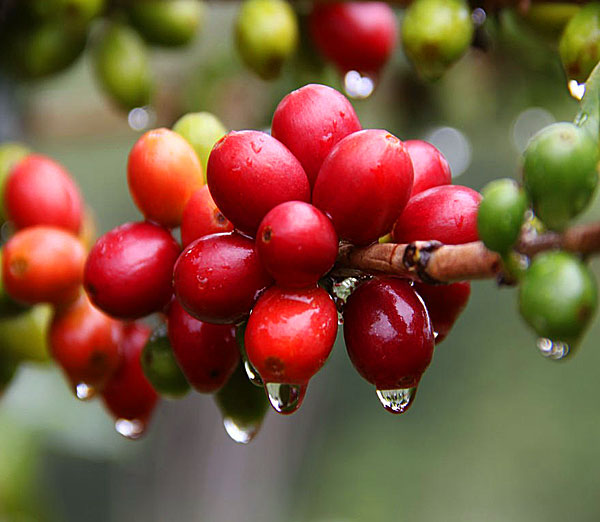
History of Arabica beans Arabica bean varieties derived from Arabica beans
The origin of the historical Arabica species (Coffea arabica) is the Abyssini Arabica sub-plateau (Abyssinia, now known as the Ethiopian plateau) in Ethiopia. In the early days, it was mainly eaten as medicine (Islamic monks used as a secret medicine to cure the body and mind or to awaken the brain), developed the habit of baking and drinking in the 13th century, and passed through the Arab region in the 16th century.
2016-03-22 Rabbi Kadou History Source Variety Card species Coffea
Arabica Coffee Variety Flavor taste Manor area introduces the characteristics of Arabica coffee beans
Arabica (Coffea arabica) is the most traditional Arabica coffee variety. Originally from East Africa, coffee was monopolized by the Arab world for a long time before the 15th century, so it was called Arabian coffee by Europeans. It turned out that all the commercial coffee in the world were small grains, but it was only at the end of the 19th century that growers began to look for other resistance to a large-scale disease.
2016-07-25 Arabian coffee variety flavor taste manor producing area introduction rabbi
Arabica Coffee Bean Coffee Manor introduction Arabica Coffee Manor
The origin of the Arabica species (Coffea arabica) is the Abyssini Arabica subplateau (Abyssinia, now known as the Ethiopian plateau) in Ethiopia. In the early days, it was mainly eaten as medicine (Islamic monks used as a secret medicine for physical and mental therapy or for awakening the brain), developed the habit of baking and drinking in the 13th century, and passed through Allah in the 16th century.
2016-07-11 Rabbi coffee beans coffee manor introduction rabbi card species Coffea a
Characteristics of Arabica Coffee Flavor description method introduction to the characteristics of high-quality coffee beans in producing areas
Arabica coffee accounts for 70% of all coffee production, and its excellent flavor and aroma make it a direct drinkable coffee with only eight Arabica beans (8). However, its resistance to dryness, frost, diseases and insect pests is too low, especially the natural enemy of coffee-leaf rust, so all producing countries are committed to products.
2016-10-13 Rabbi coffee flavor description treatment characteristics varieties producing areas boutique coffee beans
Amber Coffee with fine grains and mellow taste
Amber coffee beans mainly come from the Caribbean, whether it is the Crystal Mountains in Cuba or the natural pastures in Colombia. The growth of coffee trees provides a favorable natural environment. With fertile land, humid climate and abundant Rain Water, the Caribbean can be called a natural treasure land for coffee cultivation. The coffee forest has high humidity, small temperature difference and slow ripening of coffee beans, which is beneficial to caffeine and aromatic substances.
2015-02-12 Fine grain mouth mellow amber coffee raw beans main come
Arabica coffee flavor and taste characteristics of the largest coffee producing area introduction to the manor producing area
The three early subspecies in the Arabica species (Coffea arabica) series are ∶ blue mountain subspecies (varietal Blue Mountain), Tibica subspecies (varietal Typica) and Bourbon subspecies (varietal Bourbon). Jamaica Blue Mountain is recognized as the best coffee in the world. Tibica coffee is native to Ethiopia and southeastern Sudan.
2016-07-11 Large coffee origin Arabic flavor taste characteristics manor producing area introduction
Cultivation techniques of small-grain coffee: irrigation and fertilization
Fertilization is one of the key measures for high yield of cultivated coffee. According to the data, for every 1 kg of dried beans harvested, coffee trees absorb 70 grams of nitrogen, 14 grams of phosphorus and 76 grams of potassium from the soil.
2014-06-17 Coffee knowledge small grain coffee coffee cultivation techniques
Rain may hinder the harvest of coffee crops in Brazil
Harvest in Brazil, the world's largest producer of coffee and sugar cane, is likely to slow as rain is expected to fall for four to five days in southeastern Brazil from Thursday, forecasters said on Thursday. Brazil is currently in a dry season, consistent with the peak harvest of sugar cane and coffee crops in the region. The dry season in Brazil usually begins in May and lasts until September. Rainfall helps coffee trees in Brazil
2014-07-23 Coffee news Brazilian coffee rainfall crop harvest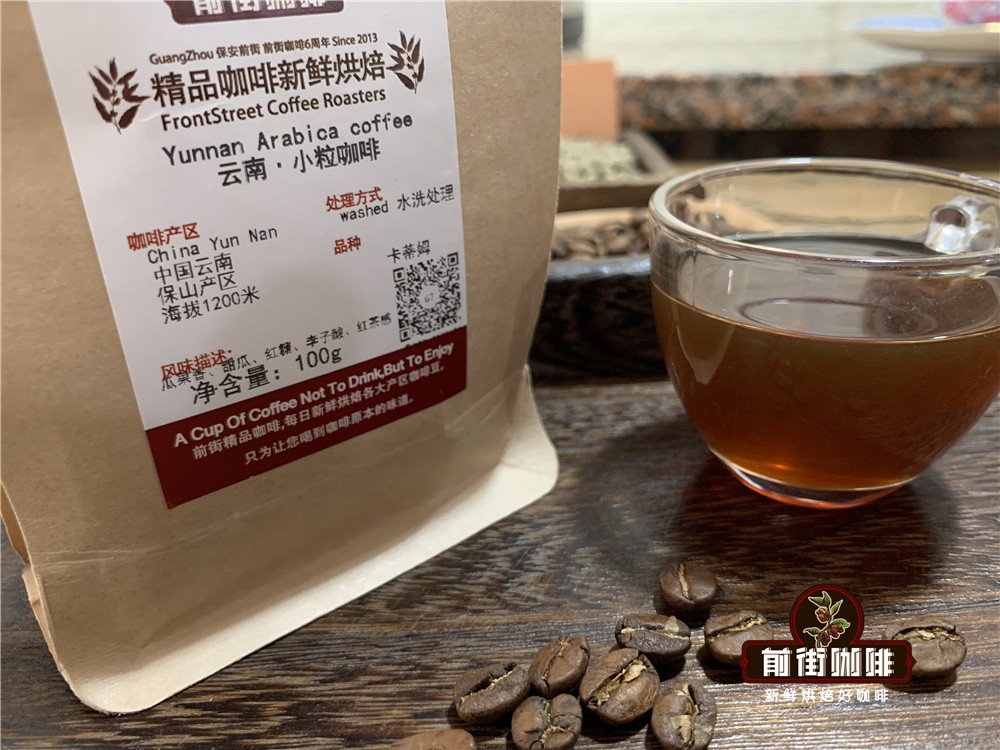
Introduction to the basic knowledge of Yunnan Fine Coffee Bean varieties description of hand-made taste of Yunnan small-grain coffee
[scientific name] small grain species are CoffeaarabicaL., medium grain species are Coffeacanephora, large grain species are Coffealiberica family genus: Rubiaceae Coffea [alias] small grain species, also known as Arabian species, medium grain species also known as Gaffra species, large grain species also known as large seed species
2023-02-05 Boutique Coffee Basics Common sense Yunnan Xiao Grain characteristics Scientific name Cof
Introduction to the planting situation of Arabica Coffee Manor
Arabica coffee trees grow between 900m and 2000 m above sea level; they are hardy, and the suitable growth temperature is 1524 ℃; they need more humidity, and the annual rainfall is not less than 1500 ml. At the same time, they also require higher cultivation techniques and conditions. Arabica coffee beans are mainly grown in South America (except Argentina and parts of Brazil), Central American countries and Africa.
2016-07-12 Rabbi card seed coffee origin introduction manor planting situation rabbi card species
Basic knowledge of fine coffee the growth environment of small-grain coffee
Small grain coffee scientific name: Coffea arabica family genus: Rubiaceae coffee genus morphological characteristics: small trees or large shrubs, plant height 5 meters 8 meters. Base usually much branched, old branches gray-white. Nodes inflated, young branches glabrous. Leaves thinly leathery-ovate-lanceolate or lanceolate, apex long acuminate, base cuneate or slightly obtuse, entire or shallowly wavy, both surfaces glabrous. Cymes several clustered in leaf axils
2014-10-29 Coffee knowledge boutique coffee basic knowledge small grain coffee growing environment
Introduction to the Flavor and taste of Arabica Coffee in China
Arabica coffee accounts for 70% of all coffee production, and Arabica coffee accounts for 70% of all coffee products. its excellent flavor and aroma make it a direct drinkable coffee with only 8 Arabica beans (8). But its resistance to dryness, frost, diseases and insect pests is too low, especially the natural enemy of coffee-leaf rust, so all producing countries are in
2016-07-12 China rabbi coffee planting situation flavor taste introduction domestic native
The species of Arabica beans, the classification of Arabica beans, coffee beans, Arabica.
Variety editor native species in all coffee production, Arabica coffee accounts for 70% of the coffee 80%, its excellent flavor and aroma make it the only coffee that can be drunk directly. However, its resistance to dryness, frost, diseases and insect pests is too low, especially the natural enemy of coffee-leaf rust, so all producing countries are committed to variety improvement.
2016-03-17 Rabbi kadou species classification coffee beans varieties editors native all coffee
Introduction to the flavor and taste of Arabica seed manor of small seed coffee
Arabica is deeply loved by Chinese people with a short history of coffee contact because of its strong fruity aroma. it was introduced to China by missionaries in the 19th century and was widely planted in Panzhihua, Sichuan, and the dry-hot valley of the Jinsha River in western Yunnan, where the sunshine was long and there was a big temperature difference between day and night. The local people solved the problem of insufficient seasonal rainfall by diverting water up the mountain.
2016-07-16 Small grains coffee rabbi card seed manor producing area flavor taste introduction
Coffee cultivation techniques detailed explanation of planting knowledge of Coffee trees
Coffee, cocoa and tea are called the three major beverages in the world, and their output, consumption and output value all rank first. In addition to being used as a beverage, coffee can also extract caffeine and coffee oil; in medicine, it can be used as an anesthetic, stimulant and diuretic cardiotonic agent. Coffee pulp can be used to make wine, vinegar, pectin and molasses; dried pulp can be used as animal feed; dried fruit shell can be used as fertilizer and burning
2015-02-16 Coffee cultivation techniques planting knowledge detailed explanation
Cultivation techniques of small-grain coffee: irrigation and fertilization
Irrigation of coffee planting areas in Yunnan Province can be divided into rainy season and dry season. Irrigation in the dry season, especially in the flowering period, can ensure the normal growth and flowering of coffee plants, improve the fertility rate, and achieve high yield. Fertilization is one of the key measures to obtain high yield of cultivated coffee. According to the data, for every kilogram of dried beans harvested, coffee trees have to come from the soil.
2015-10-07 Small grains coffee cultivation techniques irrigation fertilization Yunnan Province planting areas
Introduction of Arabica coffee beans an important kind of commercial coffee
Arabica beans are an important kind of commercial coffee with a fruiting period of less than three years and a high-quality aroma and sour taste. Arabica coffee beans are mainly produced in South America (except parts of Argentina and Brazil), Central America, Africa (Kenya, Ethiopia and other places, mainly East African countries), Asia (Yemen, India, parts of Papua New Guinea). Arabica species (
2015-11-02 Rabbi coffee beans introduction business coffee important one kind rabbi Kadou merchant